The Crisis Heritage Solution Carbon Finance Impact Calculator Partners Partner with Us
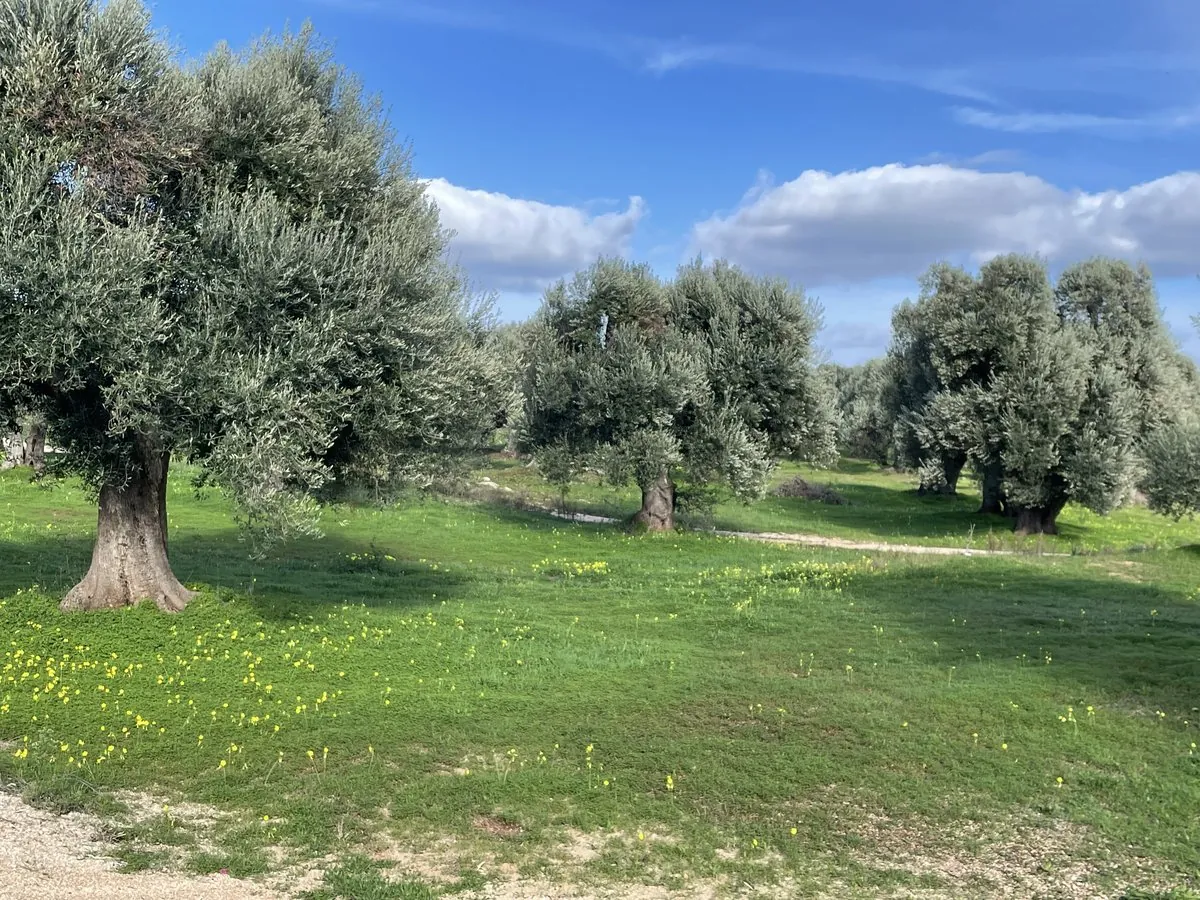
Monumental olive tree in green wildflower meadow with ancient grove, Piana degli Ulivi Monumentali

The Guardians
of Time

Of the 2.5 million olive trees covering the Piana degli Ulivi Monumentali, 300,000 are officially registered as monumental — trees of exceptional age and botanical heritage, some over 3,000 years old, individually protected by law. All of them are now under threat.

300,000Monumental Trees
2.5MTotal Olive Plants
144k LWater / ha / 1% SOC
3,000+ yrLiving Heritage
The Landscape

A Living Museum.
A Global Carbon Sink.

Between Monopoli, Fasano, Ostuni and Carovigno, along the Adriatic coast of Puglia, lies the world's highest concentration of millenary olive trees — approximately 300,000 registered plants of extraordinary botanical value, protected under Regional Law 14/2007, which declared their monumental status and recognised them as cultural heritage. A landscape dominated by olive groves covering 88.5% of productive agricultural land, with over 2.5 million plants in total.

This landscape is the product of a cultural process: originating in the Messapic era, consolidated in Roman times, and structured throughout the Middle Ages to the present day. A deposit of environmental resources and cultural assets still visible today — from dense rural networks and Roman roads to medieval tratturi, from masserie with hypogean olive presses to casedde and rural churches, from medieval water systems to Norman coastal towers, from the ruins of ancient Egnazia to the "donna di Ostuni" in Santa Maria di Agnano.

Aerial panorama of the Piana degli Ulivi Monumentali with olive groves stretching to the Adriatic Sea
Piana degli Ulivi Monumentali — Fasano, Ostuni, Carovigno

Today, 90% of these trees face death within 5–10 years from a convergence of threats that current policy is structurally incapable of addressing. A funded conservation project is the only mechanism that can stop it.

Skeletal olive trees killed by Xylella fastidiosa standing on dry barren earth under blue sky, Salento
90% Projected Mortality within 5–10 years
The Crisis

A Multifactorial
Collapse in Motion

Five kilometres south, Salento is already silent. 183,000 hectares destroyed. 21 million trees dead. The same convergence is advancing north toward 300,000 of the world's oldest trees.

🦠

Xylella fastidiosa

Advanced 150 km north in 15 years. EU eradication policy has completely failed. Only 0.14% of symptomatic trees test positive. EFSA confirmed eradication is impossible at landscape scale.

🍄

Fungal Pathogens — the invisible killer

Neofusicoccum spp. cause symptoms clinically indistinguishable from Xylella and can kill trees faster. Zero public monitoring exists. Many "Xylella deaths" are fungal deaths — uncounted, untreated, uncompensated.

🌡

Climate Stress

Puglia recorded +2.1°C above baseline in 2022–23. Drought lowers immunity and amplifies both bacterial and fungal virulence. Current legislation does not address climate stress — fighting symptoms, ignoring the amplifier.

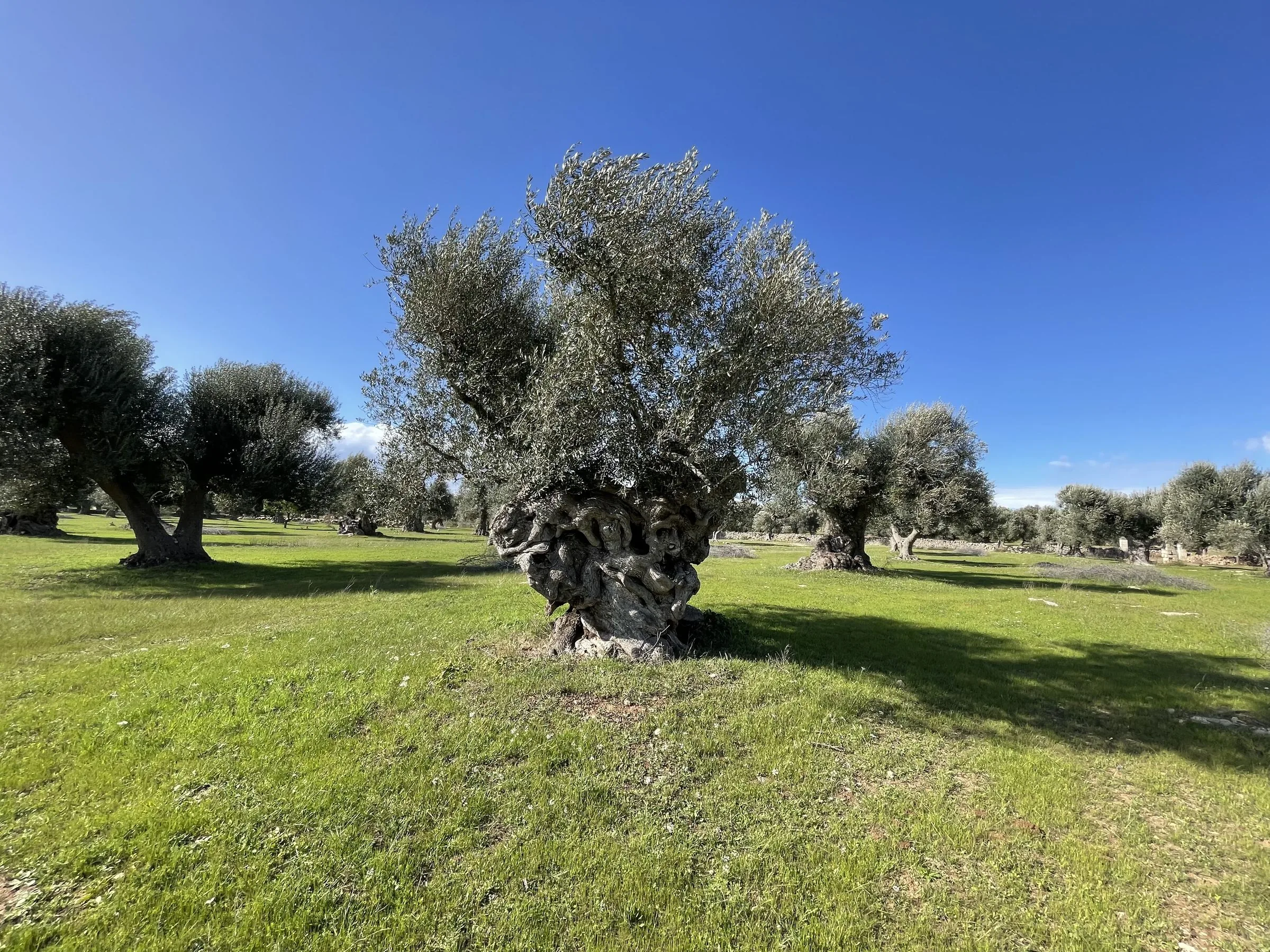
Monumental olive tree with sculpted trunk in wildflower meadow under dramatic clouds, Puglia
"This is not farmland. It is an irreplaceable archive of Mediterranean history — and a critical biological asset under immediate, existential threat."
Cultural Heritage

3,000 Years of
Living Civilisation

From Messapic settlements to Roman roads, medieval casedde to Norman towers — the Piana is not just an ecological landscape but an open-air museum of Mediterranean civilisation. The Parco Naturale Regionale "Dune Costiere" received the Council of Europe Landscape Prize special mention in 2019 for the sustainable stewardship of this extraordinary territory.

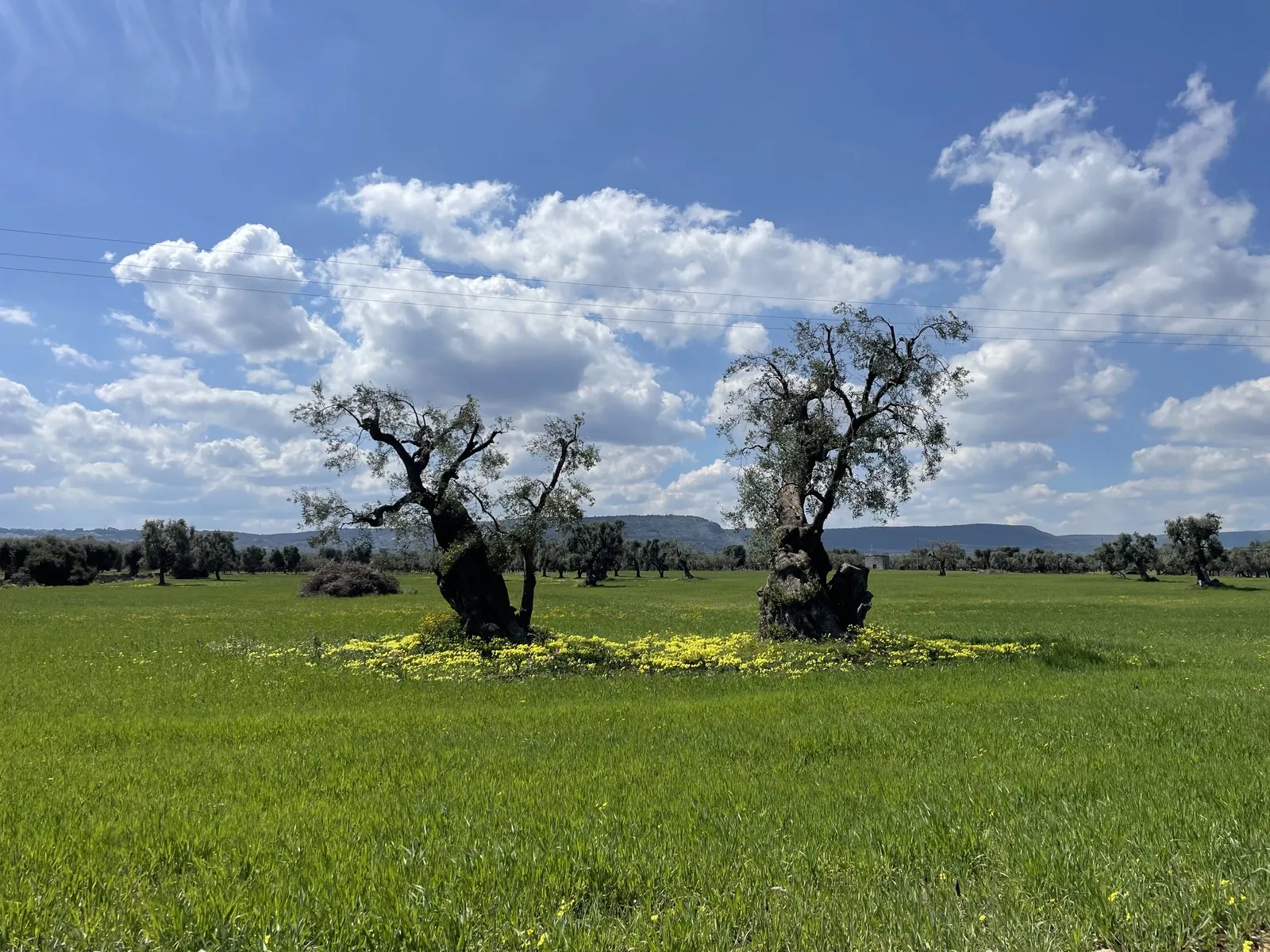
Two monumental olive trees standing in green field with yellow wildflowers, hills in distance, Puglia
Ancient Sentinels

Two monumental olive trees rise from a carpet of wildflowers — silent witnesses to millennia of Mediterranean history

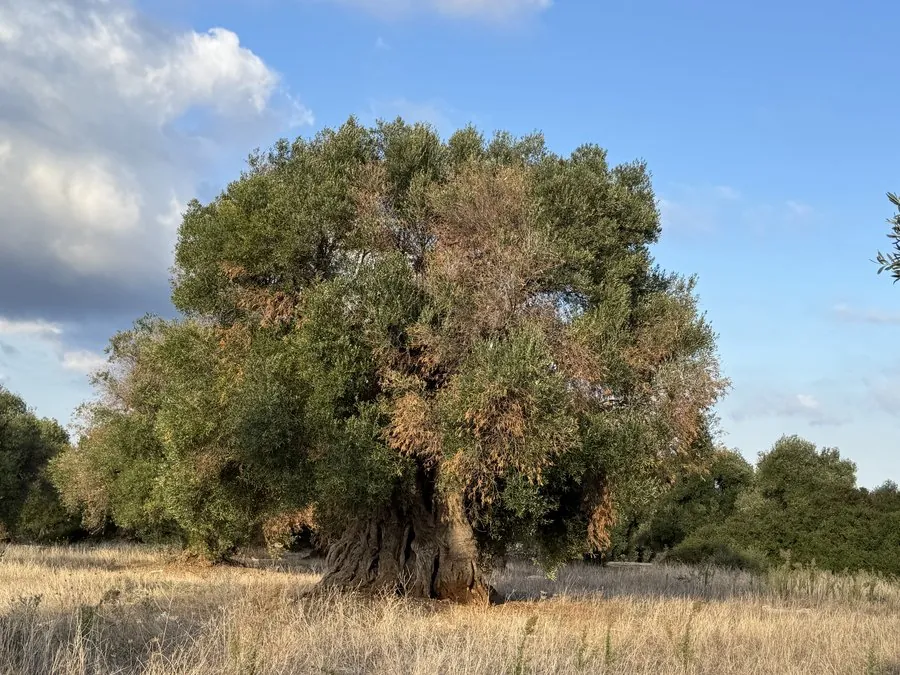
Massive monumental olive tree with brown Xylella die-back in lower canopy, dry grass, Puglia
Under Threat

Xylella die-back creeping through the canopy of a monumental tree — the existential crisis made visible

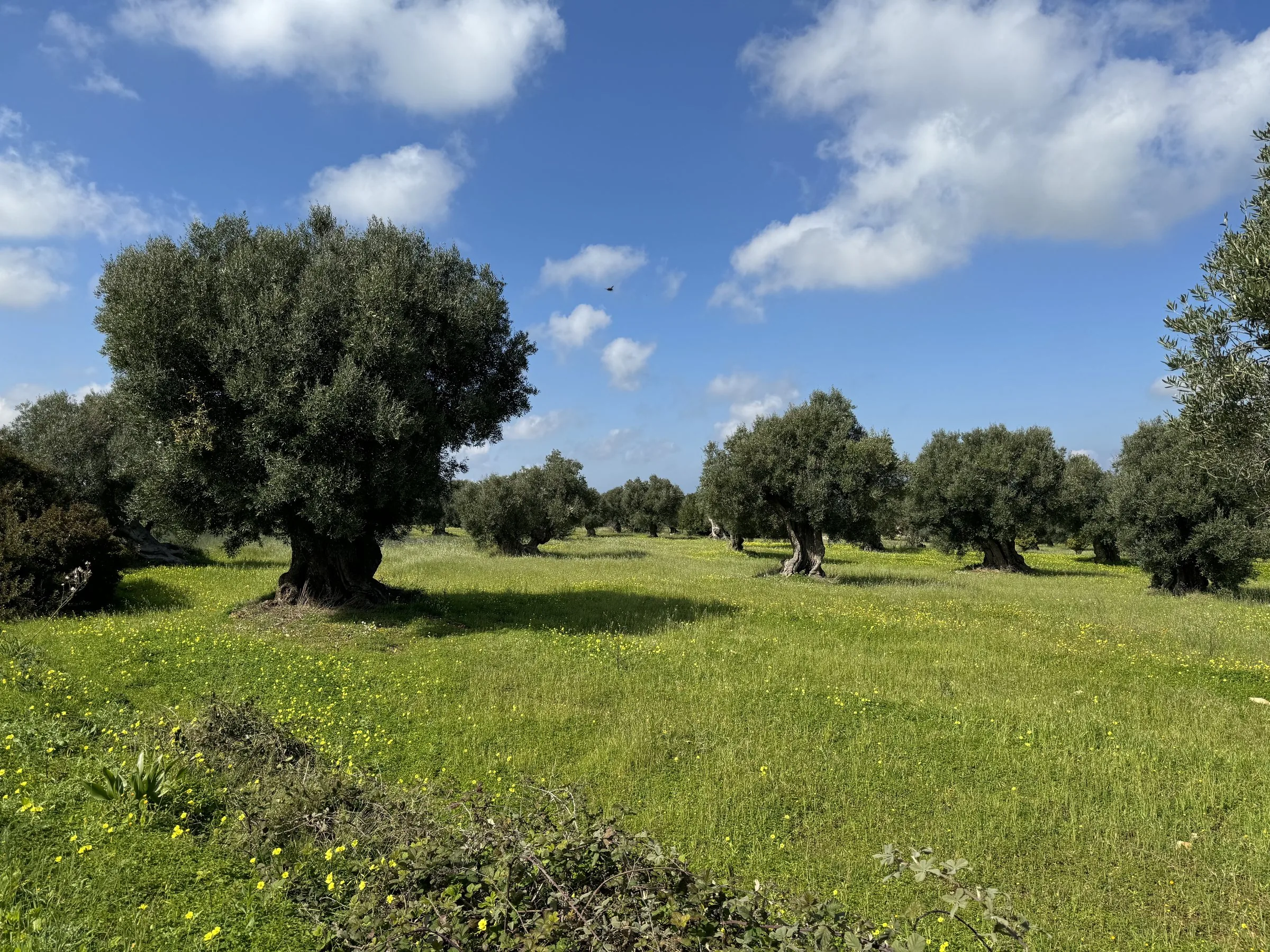
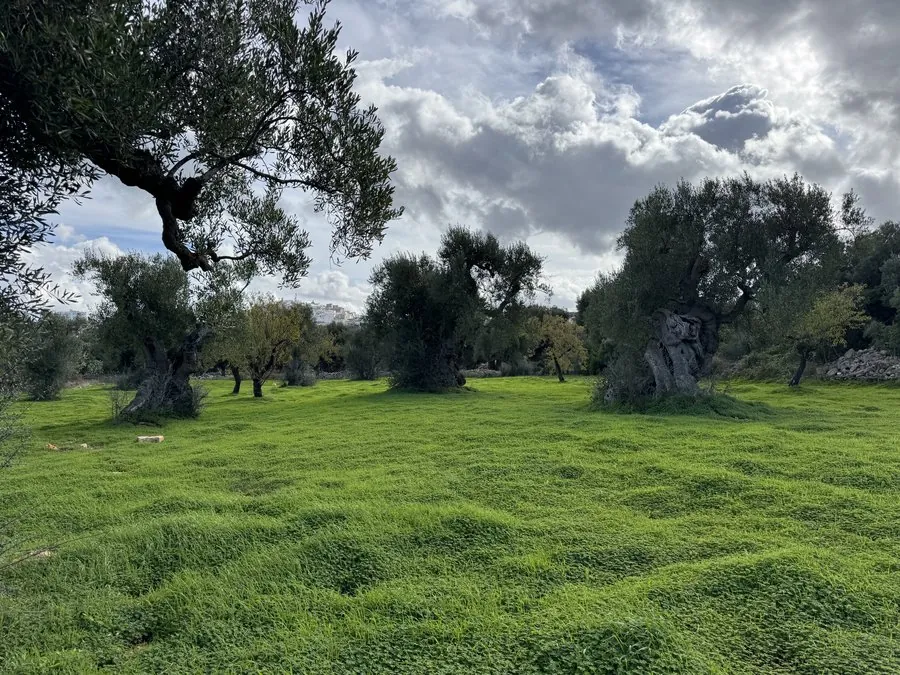
Monumental olive trees on vivid green grass under dramatic storm clouds, Puglia
Resilient Grove

Ancient trunks rooted in green pasture under gathering storm clouds — resilience embodied across centuries

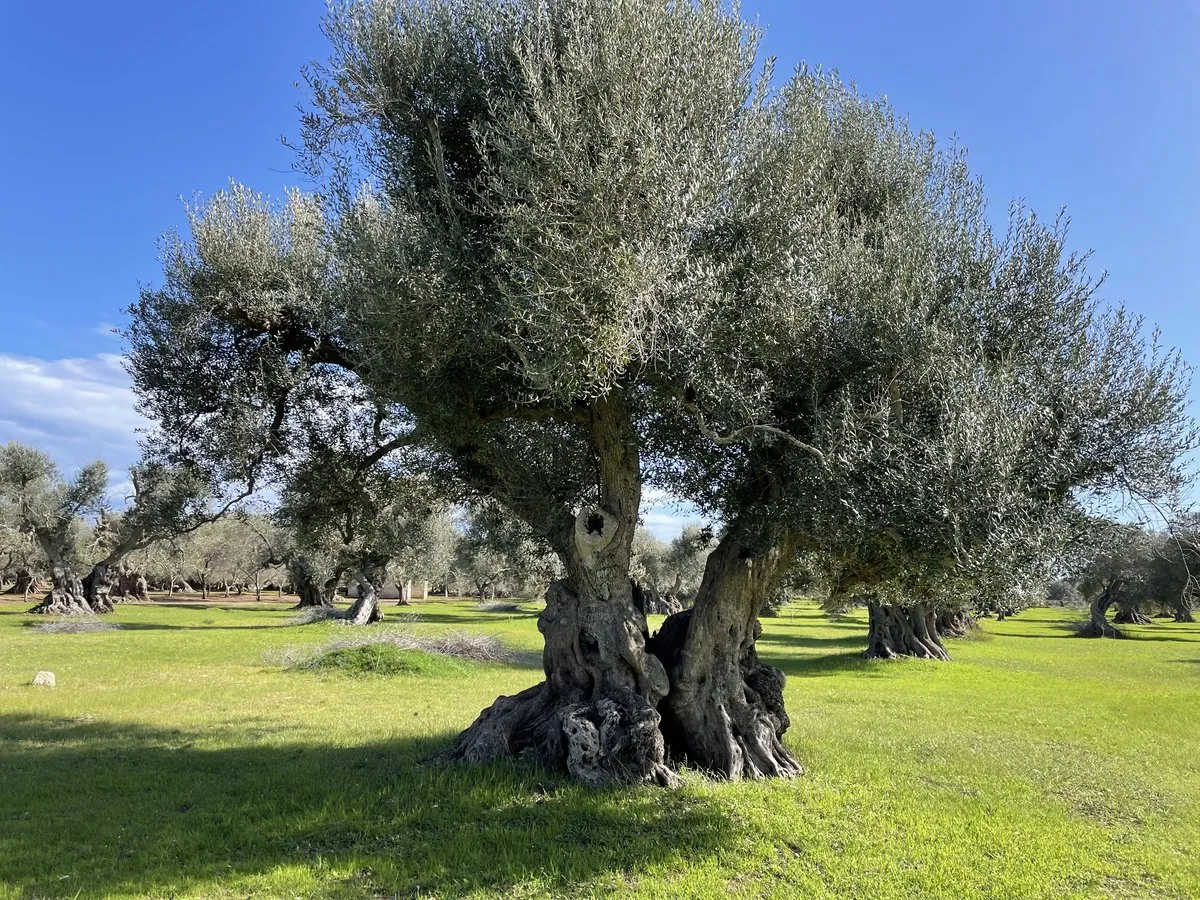
Monumental olive tree with split V-shaped trunk in green meadow, Maruggio
Living Sculpture

A monumental trunk split into a natural arch — centuries of slow growth sculpting wood into organic architecture

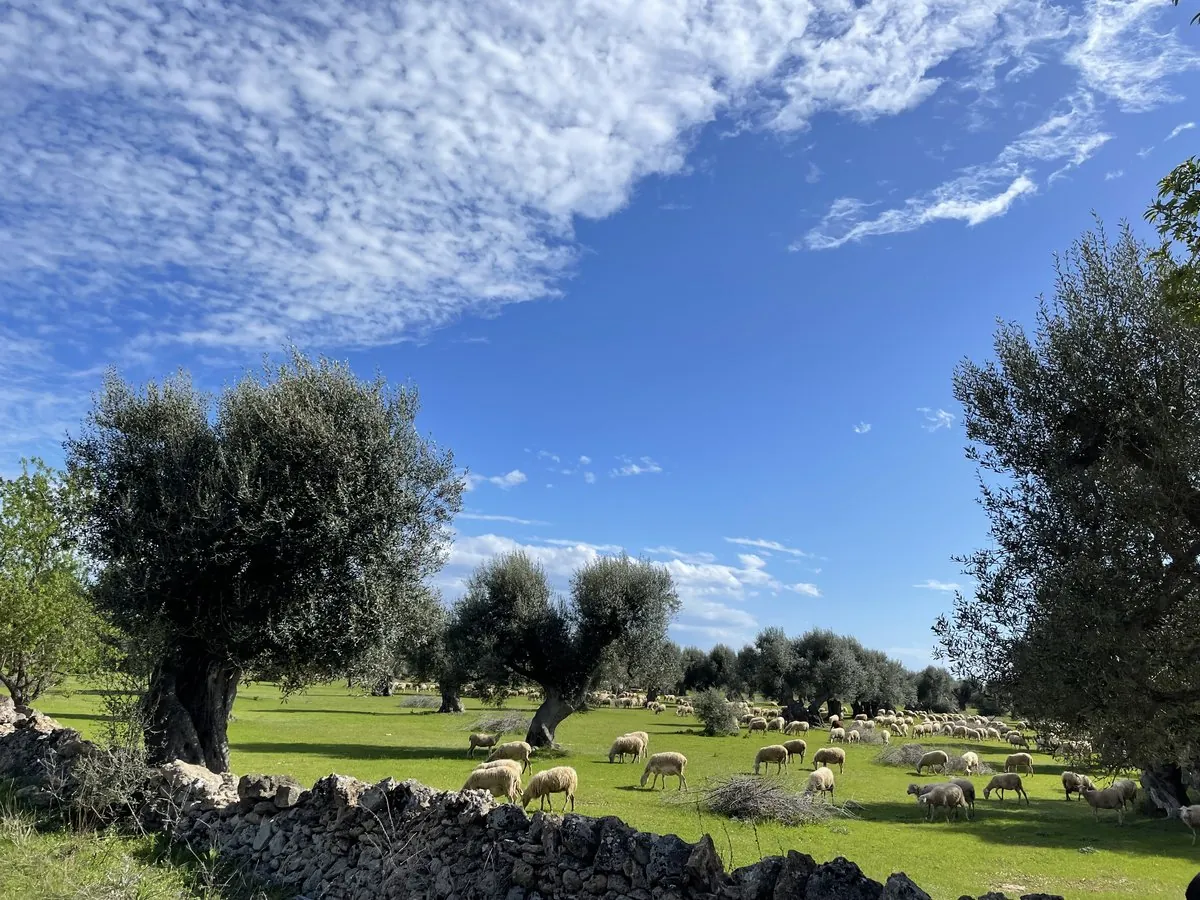
Sheep flock grazing beneath ancient olive trees with dry stone wall and blue sky, Puglia
Pastoral Heritage

A flock grazing beneath ancient olives — the agro-pastoral tradition that has sustained these groves for generations

The Solution

Co-existence
& Resilience

We cannot eradicate fungal pathogens nor Xylella — the two principal killers converging on the Piana. But we can build tree immunity, restore soil ecology, and engineer ecosystem resilience — keeping 80%+ of heritage trees alive. The integrated protocol is the first coherent response to a genuinely multifactorial threat.

Agricultural Core — Regenerative Practices
01

Regenerative Agriculture

No-till farming, cover crops, and biodiversity corridors restore soil microbiome integrity — rebuilding mycorrhizal networks ancient olive roots depend on for immunity.

Soil Health
02

Bio-Defense Protocol

Science-proven bactericidal agents, biostimulants, compost tea and targeted organic amendments work in concert to restore plant immunity and rebuild microbial diversity — at a fraction of conventional treatment costs.

Tree Immunity
03

Biochar & Carbon Stability

On-site pyrolysis of olive pruning biomass creates stable soil carbon with 500–1,000 year residence times — simultaneously improving water retention by 20–35%.

Carbon Removal
Technology & Infrastructure Layer
04

Precision Digital Monitoring

IoT sensors, satellite multispectral analysis (Sentinel/PlanetScope), drone surveys and AI-driven targeting enable intervention before symptoms appear.

MRV Technology
05

Habitat Corridors

Native hedgerows bordering the olive groves create functional wildlife corridors — linking fragmented habitat patches and introducing natural predators of Xylella's insect vectors.

Biodiversity
06

Digital Tree Census

Each of 300,000 monumental trees individually catalogued with a blockchain-verified carbon and health record — the world's first digital ancient olive archive.

Heritage MRV
Carbon Finance

The Enabling
Mechanism

Legal protection exists. Funding does not. The €5–10M required to conserve 20,000 hectares of monumental olive groves cannot come from public budgets — Regional Law 14/2007 and Natura 2000 designations protect these trees on paper, but provide nothing for active regeneration. Carbon finance is not one option among many. It is the only mechanism that can deploy capital at the scale and speed this landscape demands.

80,000–100,000tCO₂ removed per year
Stream 1 — Soil Carbon Removal

Verified SOC Accrual

Soil organic carbon accrual across 20,000 hectares of olive groves under the 13-practice regenerative protocol. Operational today under AgroEcology_Italy — Italy's first soil carbon project generating verified removal credits under an ICROA-endorsed standard. VM0042 + VM0047 + C-Farms. CCP-compliant. 75% of revenues to agricultural families at zero participation cost. Annual removal at steady state: 80,000–100,000 tCO₂.

€45–55per tCO₂ · verified removal
30,000–45,000tCO₂ removed per year
Stream 2 — Biochar Carbon Removal

Permanent Carbon Sequestration

Olive pruning residue from 20,000 hectares (~60,000 tonnes/yr) pyrolysed at a dedicated logistics centre, converted to stable biochar, and returned to project soils — closing the carbon loop while improving water retention by 20–35%. Permanence: 500–1,000 years. Verified under leading CCP-aligned carbon removal standards (Puro.earth, Isometric). Co-located composting produces compost and compost tea for soil biological activation. Annual removal at steady state: 30,000–45,000 tCO₂.

€85–120per tCO₂ · biochar removal
Operational removal credits
110,000–145,000 tCO₂/yr
Soil carbon: 80,000–100,000 · Biochar: 30,000–45,000 · 45-year crediting period
Distributed to agricultural families
€264–415M
75% of carbon revenues directly to agricultural families · zero cost to participate · Radica retains 25% for verification, MRV, coordination

These two streams fund immediate conservation. But the full scale of this landscape — 10+ million tonnes of stored carbon across 20,000+ hectares — demands a compliance-grade pathway. See the Article 6.2 & CORSIA pipeline →

Avoidance Pipeline

Article 6.2
& CORSIA

The two operational removal streams fund immediate conservation. But the real scale of this landscape — 20,000+ hectares of monumental olive groves storing an estimated 10+ million tonnes of CO₂ — demands a compliance-grade pathway. Article 6.2 of the Paris Agreement is the primary route. CORSIA Phase 2 is the structured contingency.

10M+
Potential avoidance credits
106+
Art. 6.2 bilateral agreements globally
1–1.5B
CORSIA Phase 2 demand (tCO₂, 2027–2035)
$30–97
Projected CORSIA price per tCO₂
Primary Pathway

Article 6.2 — Bilateral Cooperative Approach

Article 6.2 enables sovereign-to-sovereign carbon transfers (ITMOs) outside the voluntary market. With COP29 having established the authorization framework and registry infrastructure, the pathway is now structurally viable. Italy has no bilateral framework yet — but EU policy from 2036 will allow international credits up to 3% of 1990 emissions, and LULUCF tightening creates a strong incentive for Italy to establish Article 6.2 cooperative approaches. Radica is positioning to be the first Italian agricultural project with Art. 6.2 authorization.

First ITMO transferSwitzerland–Thailand, Jan 2024
First removal ITMONorway–Switzerland, Jun 2025
CCP compatibilityICVCM positions CCPs as complementary to Art. 6
Structured Contingency

CORSIA Phase 2 — Aviation Compliance

CORSIA's mandatory Phase 2 (2027–2035) creates 1–1.5 billion tonnes of cumulative credit demand from global aviation. Six standards are now eligible, including Verra VCS and Gold Standard. Article 6.2 credits can serve CORSIA compliance if the host country issues a Letter of Authorization with corresponding adjustments. A critical supply shortage is projected for 2027–2029 — exactly when this project's avoidance credits would enter the market.

Mandatory start1 January 2027
Eligible standardsVerra VCS, Gold Standard, ACR, GCC, CAR, ART TREES
Supply gapCritical shortage forecast 2027–2029

Development Timeline

2024–25
Art. 6.2 framework established at COP29. First ITMO transfers completed.
2026
MASE engagement on bilateral framework. Avoided-conversion methodology development. ICAO TAB eligibility finalized.
2027
CORSIA Phase 2 begins. Target bilateral agreement. Methodology submission under VCS or Art. 6.4.
2028–29
First ITMO issuance target. Italian Letter of Authorization. CORSIA supply enters critical shortage window.
2030–35
Full-scale avoidance issuance. EU Art. 6 credits from 2036. CORSIA peak demand: 166–257M tCO₂/yr.

This pipeline is distinct from the two operational removal streams. No avoidance credits are being issued or sold today. The timeline above reflects a structured development pathway, not a guarantee of issuance. All milestones are subject to regulatory developments in Italy and at ICAO/UNFCCC level.

Your Commitment

What could your commitment protect?

2.5 million ancient olive trees. One of the world's most threatened landscapes. Tell us how you'd like to engage.

Your commitment

Carbon volume to retire

How many tonnes of verified removal credits are you looking to retire?

10,000 tCO₂
1,000 t500,000 t
Price / t €50 / t
€45 · Soil carbonBiochar · €120
Available investment

Your impact budget — CSR allocation, residual emissions fund, or 1% commitment. We'll show you what it protects.

€250,000 EUR
€5k€5M
Price / t €50 / t
€45 · Soil carbonBiochar · €120
What matters most to you?

Select your primary motivation. We'll frame your impact accordingly.

Investment

Adjust to see the scale of your impact

€100,000 EUR
€5k€2M

A tree of your own.

This option is designed for individuals and small businesses. Before we continue — which best describes you?

Larger organisations are welcome — we'd love to discuss a more meaningful partnership through our Impact Budget or Carbon tabs.

How many trees?

Each ancient olive tree costs €200 to protect for 45 years.

3
trees · €600 total
or enter a gift amount
EUR

€700 adopts 3 trees (€600) — or round up to 4 trees for €800

Gift certificate details

Your grove

Trees you would protect
2,500
ancient olive trees · avg. age 400–1,200 years
Carbon secured
10,000
tCO₂ total
Hectares protected
33
of the Piana degli Ulivi
Total investment
€500,000
at current pricing
Cost per tree
€200
protected for 45 years

Your grove — visualised

Share of the full Piana degli Ulivi 0.10%

These trees were already ancient when Columbus sailed. Your commitment ensures they outlast us all.

Xylella fastidiosa is advancing at ~20 km/yr. Without intervention, these trees face irreversible loss within a generation.

3
ancient olive trees · yours to protect
€600
one-time commitment · 45-year protection

Three trees that may have stood since the Byzantine Empire. Older than most nations. Witnesses to a thousand harvests. Yours to protect.

Carbon stored
12
tCO₂ in living biomass
Estimated age
400–1,200
years old
Location
Puglia, IT
Piana degli Ulivi Monumentali
Threat
Xylella
advancing at ~20 km/yr

Gift certificate preview

Radica

Guardians of Time · Piana degli Ulivi Monumentali

Certificate of Tree Adoption

Presented to

Your recipient

is now the proud guardian of

3

ancient olive trees in Puglia, Italy

Protected in the Piana degli Ulivi Monumentali, Puglia.

Ready to secure your offtake
and protect your grove?

2.5M olive trees · ~25,000 ha · Piana degli Ulivi Monumentali, Puglia · avg. 4 tCO₂ / tree over 45-year project life (SOC + biochar removal)
VM0042 · Puro.earth / Isometric · ICR Registry (ICROA-endorsed) · AgroEcology_Italy · €200/tree based on €50/t indicative soil carbon pricing

Elevated view of endless olive groves stretching to the Adriatic, Piana degli Ulivi Monumentali
20,000 hectares of living carbon infrastructure — stretching unbroken to the Adriatic
Beyond Carbon

Impact at Every Scale

Massive ancient olive trunk with gnarled bark on red terra rossa earth, Puglia
80%Target Survival Rate
>3,000

Agricultural families protected

Across Monopoli, Fasano, Ostuni, and Carovigno — families whose livelihoods and multi-generational heritage are bound to these trees. 75% of all carbon revenues flow directly to agricultural families, at zero participation cost.

144k L

Water retained per 1% SOC gain per hectare

SOC enhancement is the most powerful drought-resilience infrastructure in Mediterranean agriculture. At 90% mortality, the Piana would permanently lose the equivalent of a 150–300 billion litre annual water reservoir.

UNESCO

Heritage candidacy supported

The Piana is under active UNESCO World Heritage candidacy. This project's conservation framework directly strengthens that case — protecting 3,000 years of continuous Mediterranean agricultural culture.

EU NRL

EU Nature Restoration Law aligned

Full alignment with EU NRL, Biodiversity Strategy 2030, and SDGs 13 and 15. The Piana includes Natura 2000 zones — activating legal conservation commitments that public budgets alone cannot fund.

Standards & Methodology

Built for Institutional
Scrutiny

Operational · CCP-Compliant

Dual Removal Methodology

VM0042 + VM0047 + C-Farms · Puro.earth / Isometric

Two CCP-compliant removal streams, operational today. Soil organic carbon accrual quantified under VM0042 with VM0047 and C-Farms for non-CO₂ GHG — the most conservative and widely scrutinised agricultural land management methodology available. Biochar permanence (500–1,000 years) verified under Puro.earth and Isometric, the leading CCP-aligned removal standards. Both streams already validated through AgroEcology_Italy (75,689 tCO₂e verified, 2024–25).

Registry · Integrity

ICROA-Endorsed · ICR Registry

ICROA · ICR Registry

All removal credits issued through the ICR Registry — an ICROA-endorsed standard that preceded the ICVCM's Core Carbon Principles and remains the benchmark for carbon credit quality. Italy's first and only soil carbon project developed under an ICROA-endorsed standard. Full third-party verification, public issuance records, and transparent retirement tracking.

Co-Benefits · Quality

CCB Standard v4

Climate · Community · Biodiversity

Dual-labelled under the Climate, Community and Biodiversity Standard v4 — independently verifying that the project delivers measurable biodiversity gains and direct economic benefits to agricultural families beyond the carbon claim alone. A quality signal for buyers whose procurement policies require demonstrated co-benefits.

Additionality is well-documented and robust: legal protection (L.R. 14/2007, PPTR, Natura 2000) exists but provides no funding for active conservation. The €5–10M required cannot be sourced from public budgets. Carbon finance is the only viable mechanism — and this is the only project positioned to deploy it at landscape scale in the Piana.

Institutional Partners

Built on Ground-Level
Relationships

Pilot Partner

Associazione A.M.O. Puglia — Alberi Monumentali di Ostuni

The association dedicated to the protection and promotion of monumental trees in Ostuni and the surrounding territory. Together with A.M.O. Puglia we have launched the first on-the-ground pilot of the integrated conservation protocol — 150 hectares of monumental olive groves under active monitoring and regenerative management, with 25 hectares of owned/leased land as the operational base.

150 ha Pilot Active
Visit Site →
Institutional Partner

Parco Naturale Regionale "Dune Costiere da Torre Canne a Torre S. Leonardo"

The regional natural park established in 2006 to safeguard the historic, cultural and environmental values of the coastal territories of Ostuni and Fasano. The Park actively promotes sustainable stewardship of the entire Piana landscape — earning the European Charter for Sustainable Tourism (CETS) in 2012 and the Council of Europe Landscape Prize special mention in 2019.

CETS 2012 CoE Landscape Prize 2019
Visit Site →
Research Partner

Università degli Studi di Bari Aldo Moro

Italy's leading southern research university, confirmed as the scientific partner for above-ground biomass quantification across the Piana. The UniBa team will deploy LiDAR and Mobile Laser Scanning (MLS) to generate high-resolution 3D point cloud models of monumental olive trees — establishing the first spatially explicit biomass baseline for carbon stock accounting at landscape scale.

LiDAR & MLS Biomass
Visit Site →

Research Network — In Development

In Development

CREA — Consiglio per la Ricerca in Agricoltura

Compost tea formulation and efficacy trials for soil biological activation under olive grove management systems.

In Development

CNR — Consiglio Nazionale delle Ricerche

Monitoring the evolution and epidemiology of Xylella fastidiosa across the Piana and evaluating biocontrol protocol efficacy.

In Development

CMCC — Centro Euro-Mediterraneo sui Cambiamenti Climatici

Practice-level monitoring and additional indicator tracking for climate resilience assessment across regenerative management sites.

Government Engagement Pipeline

Regione Puglia Provincia di Brindisi Comune di Ostuni Comune di Carovigno Comune di Fasano Comune di Monopoli
The Operator

Why Radica

Italy's only carbon farming operator with a project developed under an ICROA-endorsed standard — built from the ground up in Puglia, with the MRV infrastructure, regulatory track record, and farmer relationships to execute at landscape scale.

AgroEcology_Italy — Italy's first project under an ICROA-endorsed standard

20,000+ ha under management, 650+ farmers enrolled. 75,689 tCO₂e verified for 2024–25 under VM0042 / ICR registry. Growing 400 ha/week across Italy.

Operational MRV infrastructure

Blockchain-verified records, drone monitoring, satellite multispectral analysis, IoT soil sensors — all operational. Zero ramp-up on VM0042 component.

Scientific partnerships

CNR National Research Council (biodiversity grant), CREA (compost tea trials), A.M.O. Puglia (150 ha pilot, 25 ha owned/leased). Scientific rigour built in from day one.

Farmer-first revenue model

75% of carbon revenues directly to agricultural families at zero participation cost. Radica retains 25% for verification infrastructure, MRV technology, network coordination, and project management — full transparency, no hidden margins.

Mediterranean expansion pipeline

250,000 ha target by 2030. Spain (Esférico MRV acquisition), Greece, Tunisia in active planning. The Piana becomes the flagship for the entire basin.

One of Europe's only woody crop specialists

Soil carbon methodologies are overwhelmingly designed for annual crops. Radica is among the very few operators in Europe with validated expertise in woody perennial conservation and regeneration — olive, almond, citrus — where sequestration rates and permanence are structurally superior.

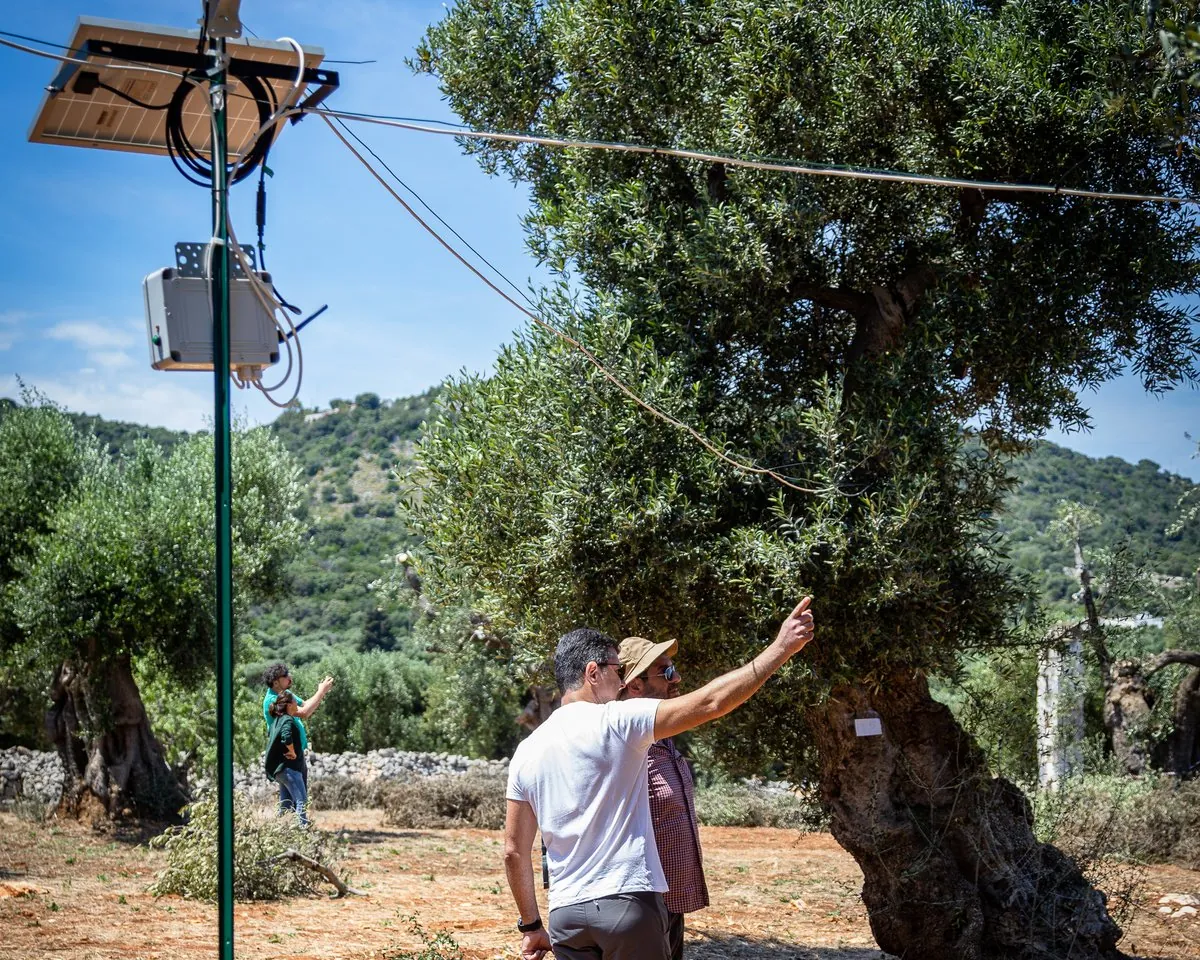
Researchers conducting biodiversity monitoring beside a monumental olive tree with solar-powered sensor station in the grove, Puglia
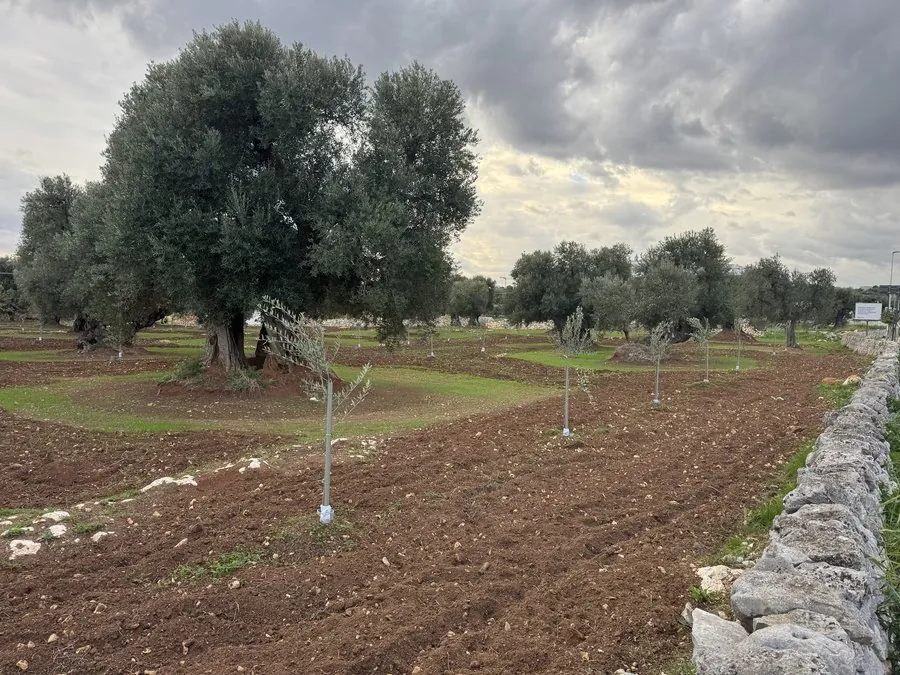
New olive saplings planted among ancient monumental trees with fresh tilled soil, Ostuni
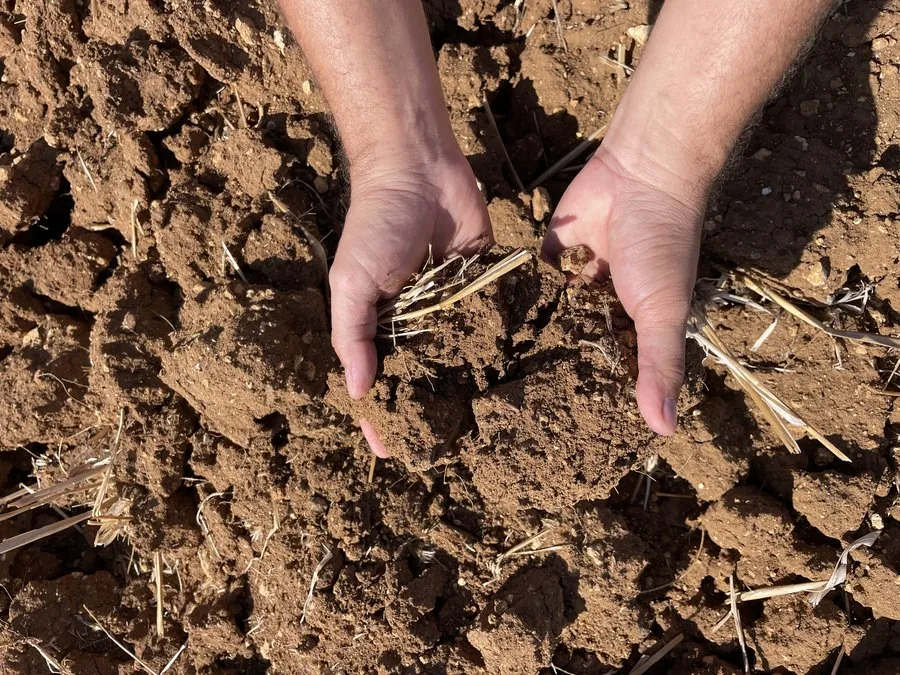
Hands cradling red terra rossa soil with dry straw, close-up showing the rich earth that sustains Puglia's ancient olive groves
Healthy centenarian olive trees in green meadow with yellow wildflowers under blue sky, Maruggio
Single majestic monumental olive tree in green field under blue sky with grove behind, Maruggio
Partner with Us

Help Secure
the Next Millennium

Three pathways to participate — as a sponsor securing verified carbon assets from Europe's most rigorous removal programme, as a credit offtaker building long-term supply of CCP-compliant Mediterranean removals, or as a philanthropic partner helping protect an irreplaceable cultural and ecological heritage.

Proud supporter of the 1% for the Planet framework

Get in Touch
Sponsor · Offtake · Partnership

Thank you — we'll be in touch within 48 hours.